
Waste Heat Recovery Units: Maximizing Energy Efficiency
Capture and repurpose industrial exhaust heat to reduce energy costs and minimize your carbon footprint.
Power-Free
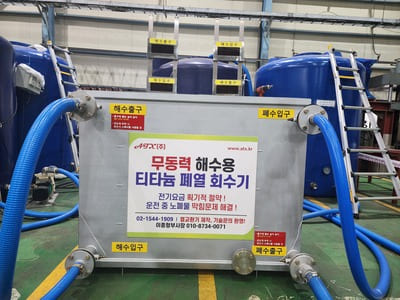
Titanium Waste Heat Recovery System
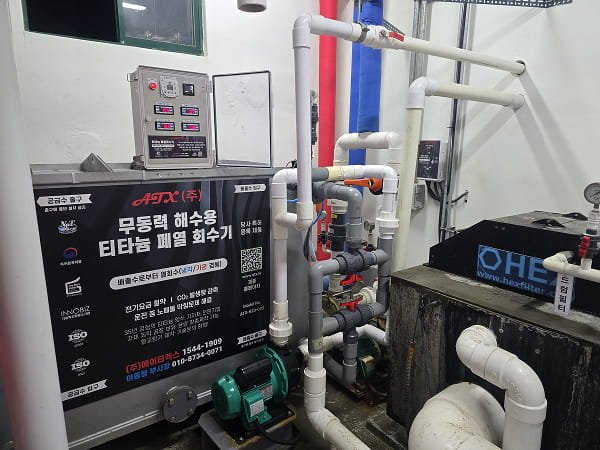
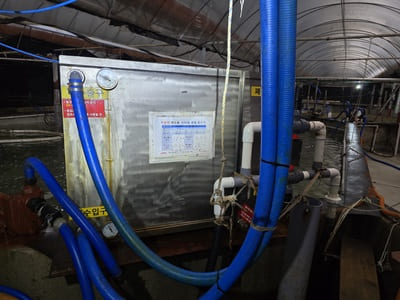
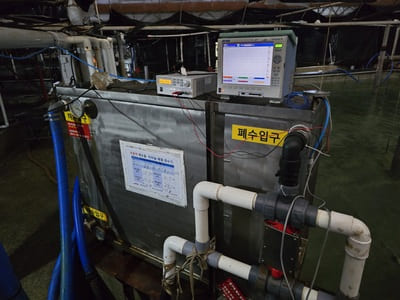
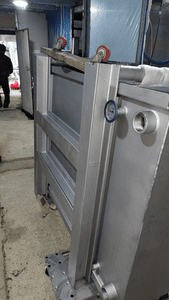
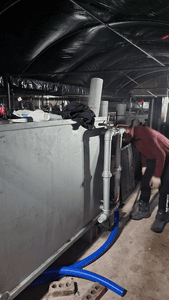
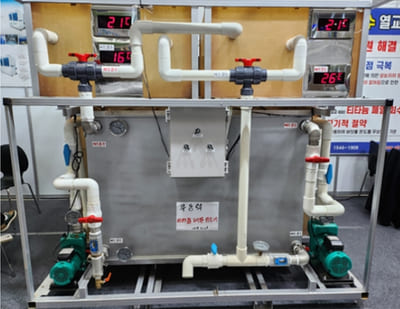
Aquaculture facilities generate unused heat from water treatment, equipment, and processes. The Waste Heat Recovery Unit recovers this waste heat and reuses it as energy for aquaculture operations—without additional power consumption.
Rising electricity bills every year...
Isn’t it a waste to throw away
USABLE ENERGY?
Wasted energy—
RECOBER IT NOW!
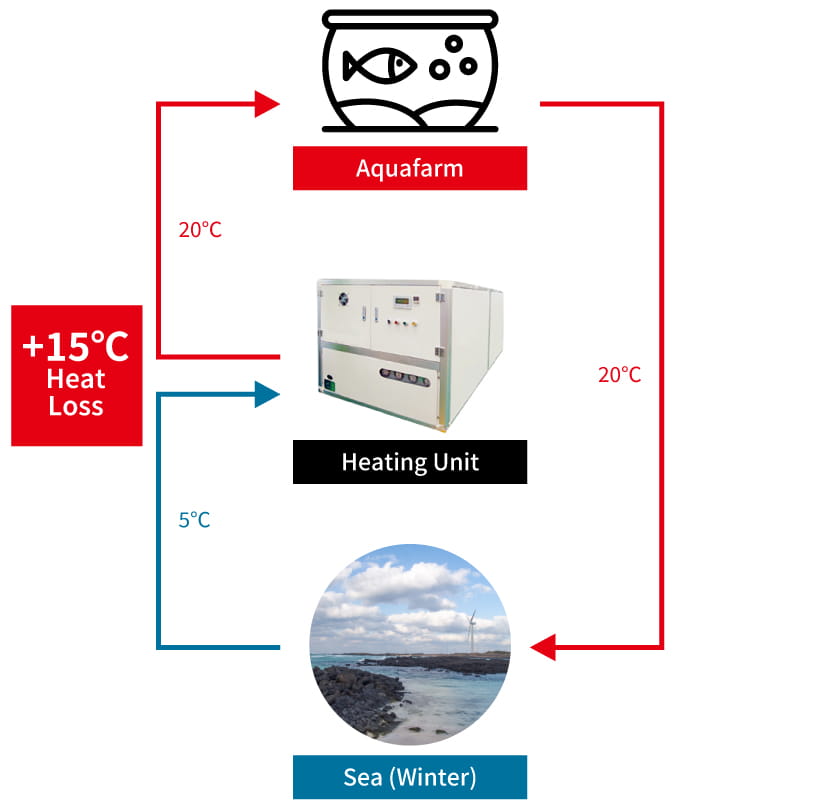
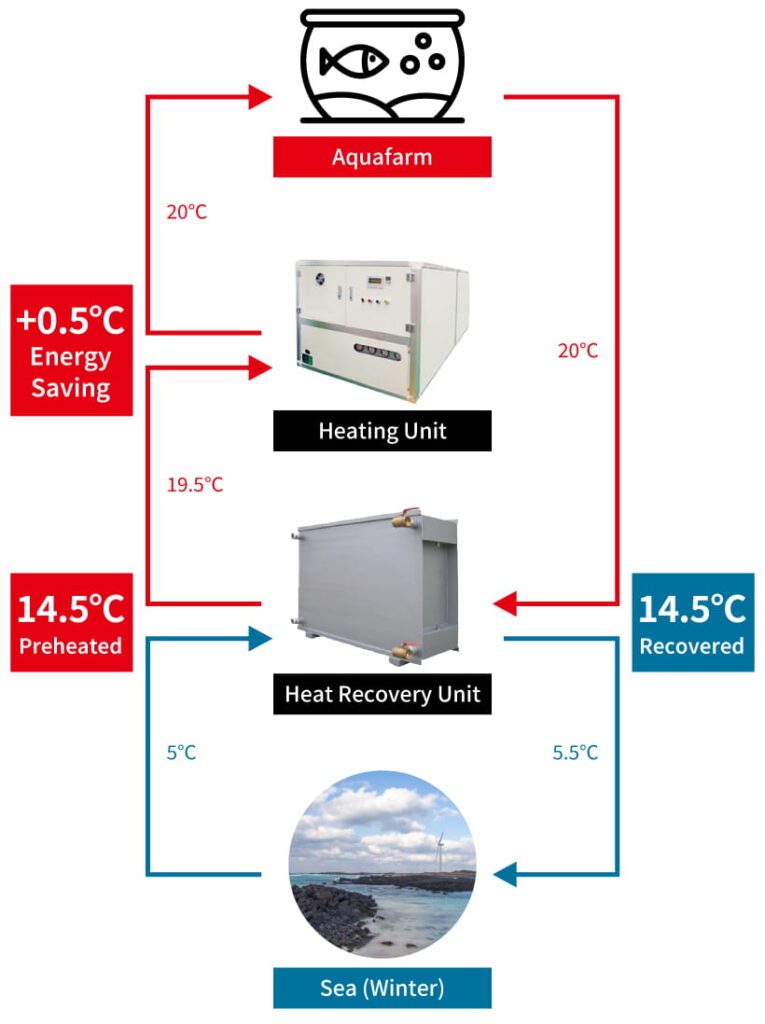
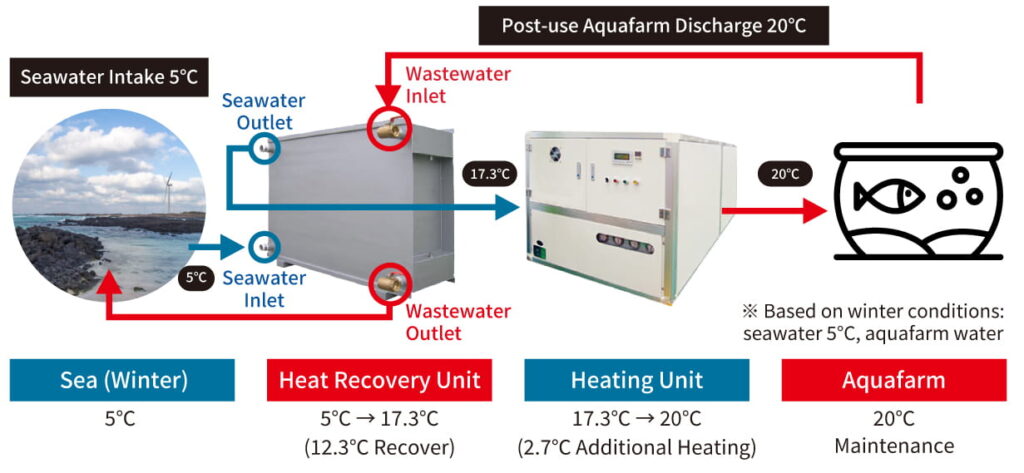
Heat Recovery Unit Operation Flow Diagram
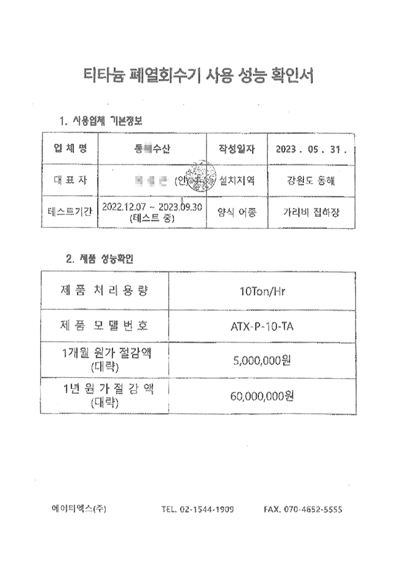
Product performance verified
by two national accredited institutions
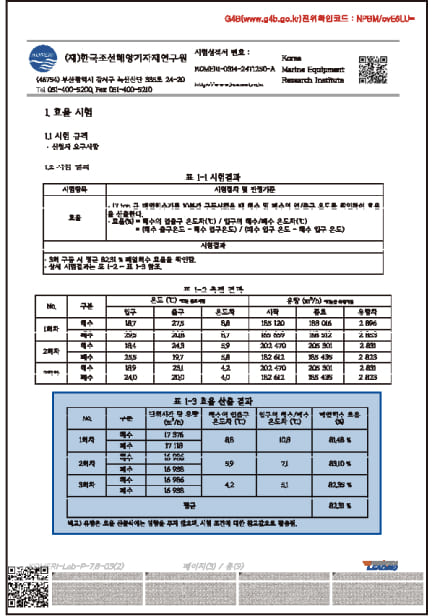
Korea Marine
Equipment Research Institute
Korea Refrigeration & Air conditioning Assessment Center
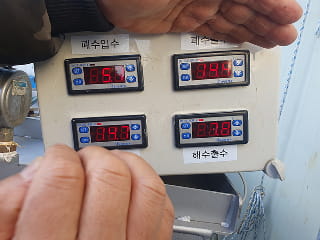
Waste Heat Recovery Efficiency Test
| Cycle | Туре | Temperature | Heat Recovery Rate | |
|---|---|---|---|---|
| Inlet | Outlet | |||
| 1st | Seawater | 18.7 | 27.5 | 81.48% |
| Wastewater | 29.5 | 20.8 | ||
| 2nd | Seawater | 18.4 | 24.3 | 83.10% |
| Wastewater | 25.5 | 19.7 | ||
| 3rd | Seawater | 18.9 | 23.1 | 82.35% |
| Wastewater | 24.0 | 20.0 | ||
Confirmed: Average heat recovery efficiency exceeds 80%!
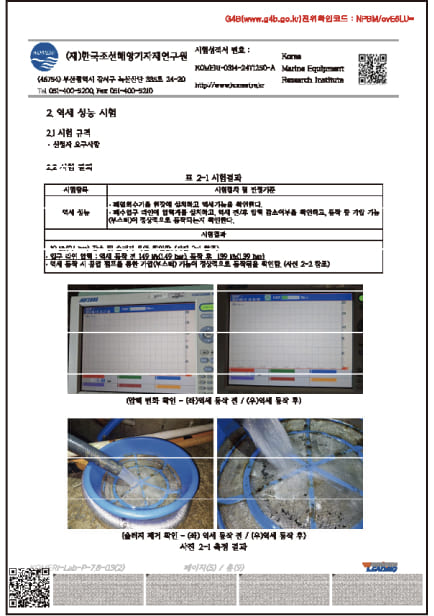
Backwash System Operation Test
Sludge removal
confirmed
Booster function
of air pump confirmed
Experience ATX's Solutions
For 35 years, ATX has specialized exclusively in titanium processing.
We understand the challenges aquaculture operators face—
and we’re here to solve them together.

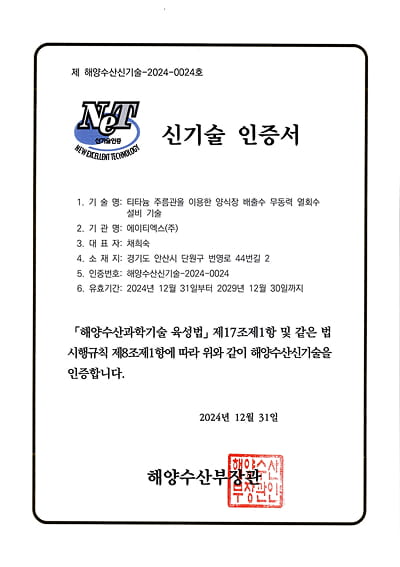
NET Certification (MOF, Korea)
Heat Recovery Rate
experience
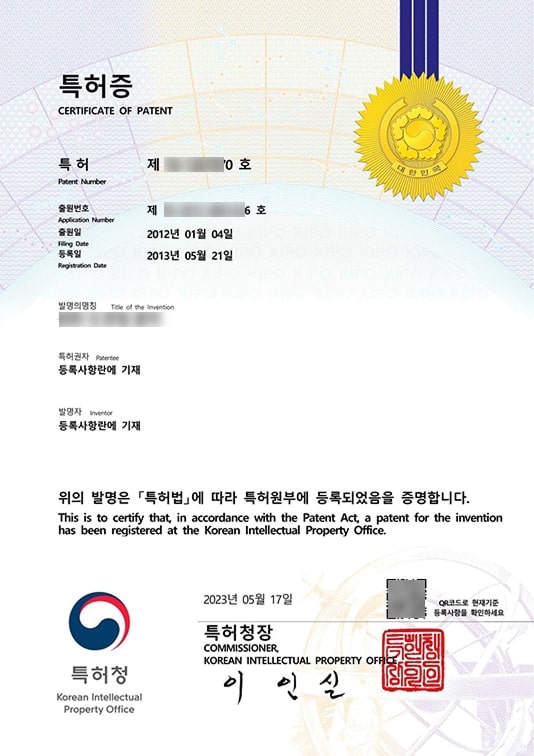
Patent Registered for ATX Waste Heat Recovery System
Korean Intellectual Property Office (KIPO)
Case study
Naju(Korea) Aquaculture Facility (Species: Eel)
Before
28 °C wastewater (40 tons) discharged → 5 °C groundwater heated to 23 °C Heating via bunker C fuel & electric boiler
After
Waste heat recovered → only +5 °C additional heating required Monthly energy cost significantly reduced
Additional units purchased after initial success → two 20-ton units now in operation
Jeonlanam-do Fisheries Research Center (Target Water Temperature: 18–20 °C)
Before
Seawater temperature dropped significantly during winter operation. Water heating relied primarily on electric heaters, resulting in high energy consumption and limited temperature stability.
After
Waste heat recovery unit applied to discharged process water. Recovered heat pre-warms incoming seawater, reducing the load on electric heating systems. Stable water temperature maintained with lower energy input.
Flounder (Flatfish) Aquafarm (Required Temperature 17℃)
Before
Heat pump cools
600 tons of
seawater
per day
from over 29°C
down to 12°C
Heat pump heats
600 tons of
seawater
per day
from 4°C
up to 13°C
After
Recovers 9.5°C
of cooling energy
Heat pump
only needs to
cool by 2.5°C
Recovers 10.5°C
of heat
Heat pump
only
needs to
heat by 2.5°C
Monthly cost savings
USD 2,700~2,900
Scallop Aquafarm (Required Temperature 5℃)

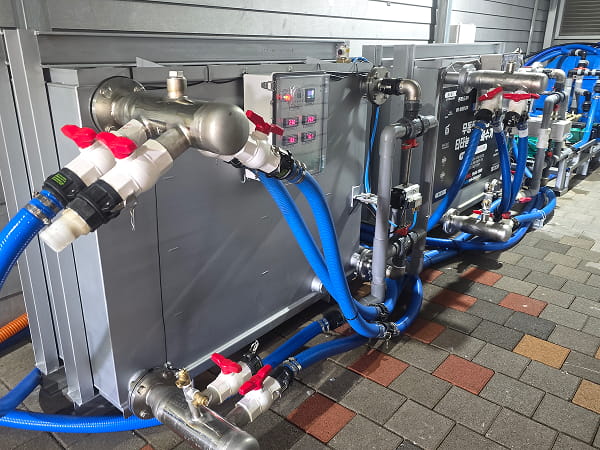
Performance Verification Report

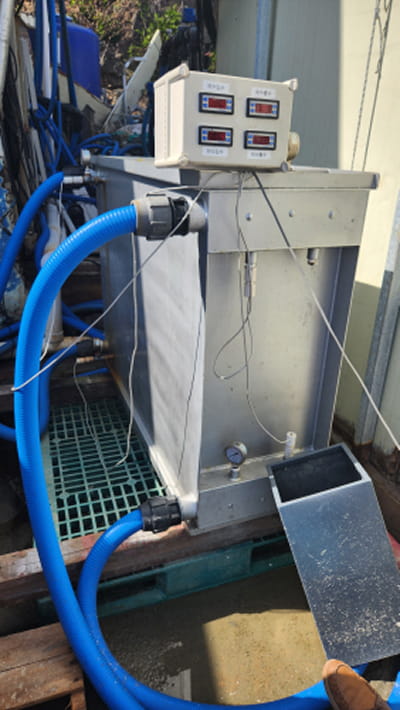
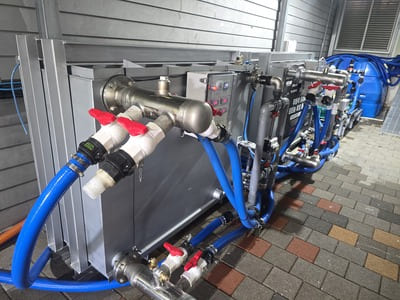
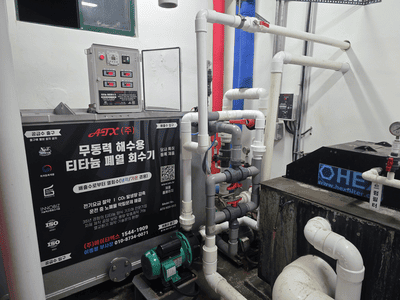
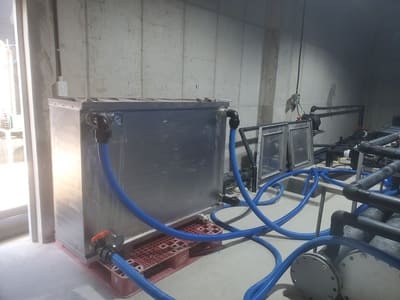
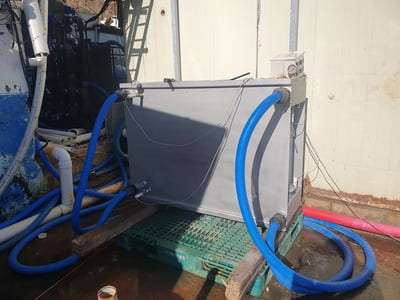
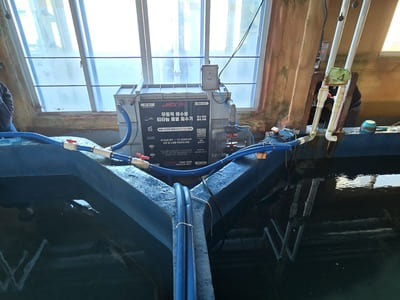
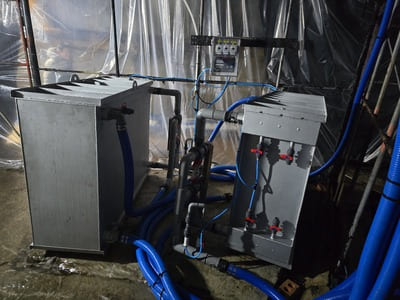
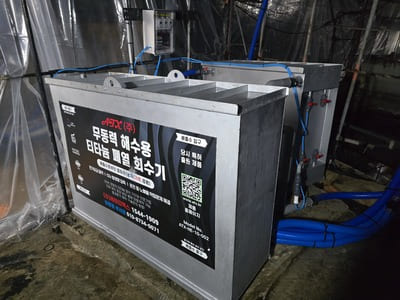
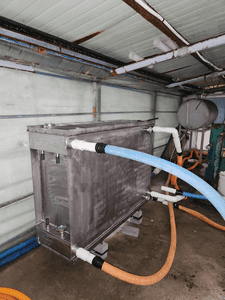
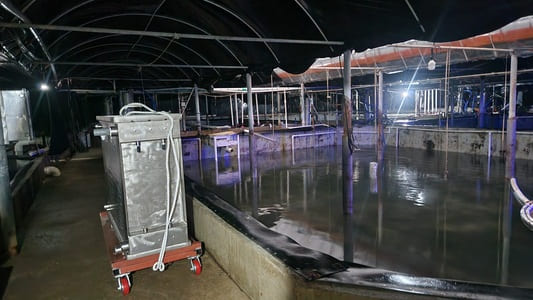
On site Installation Photo
Before
The heat pumpcools seawater down to 12°C
After
82% cooled by heat recovery unit, only 18% by heat pump.
We solved the problems
of conventional heat recovery systems
〈 Conventional Heat Recovery Unit
Our Titanium Heat Recovery Unit 〉
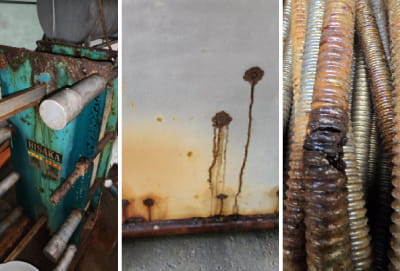
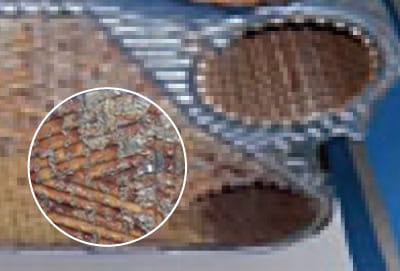
1. CORROSION

Corrosion of metal and rubber parts Leads to equipment failure Generates heavy metals
100% Titanium Used Inside and Out Exceptional corrosion resistance to salt and chemicals (Heavy Metal Free) Far superior chemical resistance to CIP agents compared to stainless steel
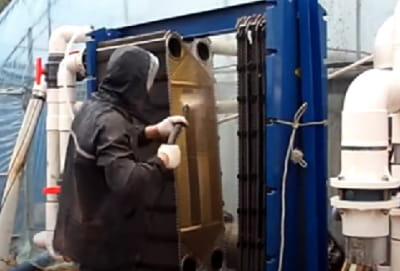
2. CLOGGING

Plate heat exchangers often clog with sludge. Not suitable for continuous use in sludge environments

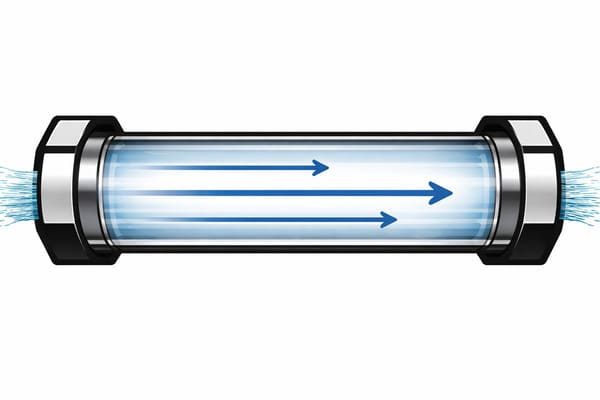
Titanium tube-through design ensures smooth flow, minimizing clogging by sludge
3. MAINTENANCE

Requires regular full disassembly, cleaning, and reassembly
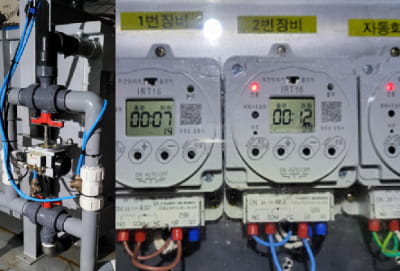
Periodically reverses water flow to remove scale and debris automatically Automatic backwash system
We solved the problems
of conventional heat recovery systems

Straight Tube
Water flows straight through
→ Lower heat transfer efficiency

Corrugated Tube
Turbulence generated at corrugations
→ Larger effective heat transfer area
→ Higher heat exchange efficiency
Why Use Titanium?

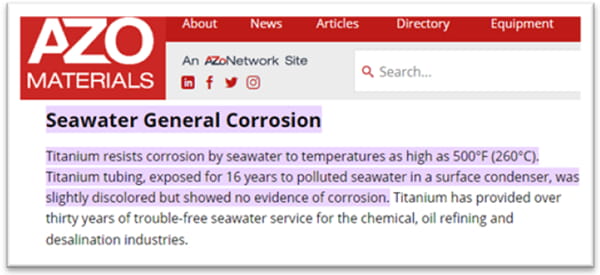
Exceptional Corrosion Resistance in Seawater
Titanium exhibits outstanding resistance to general corrosion in seawater environments. Because of these properties, titanium has been used reliably for over 30 years in seawater desalination industries.
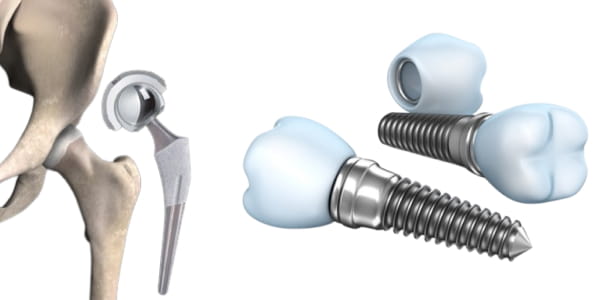
Proven Safety and Purity for Biological Contact
100% titanium eliminates heavy metal contamination and ensures safe, stable water quality—even in direct contact with living organisms.
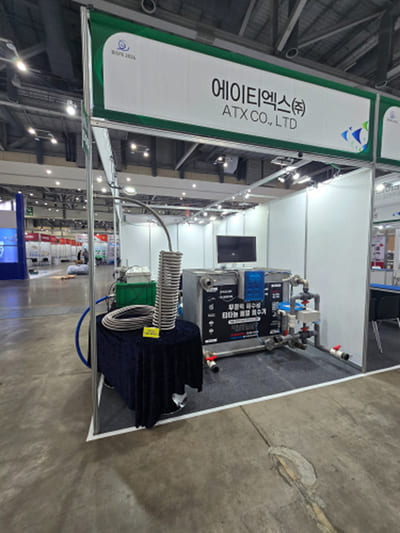
Advantages of Waste Heat Recover
100% Power-Free Heat Recovery
The heat recovery function operates solely on thermal conduction. No electricity or fuel is required for heating or cooling, other than the circulation pump and motor.
Up to 80% Energy Cost Reduction
Up to 80% of the heat contained in wastewater is recovered, requiring only the remaining 20% for supplemental heating. This results in significant reductions in fuel and electricity costs compared to conventional heating and cooling systems.
- Performance may vary depending on operating conditions
- Based on KOLAS-accredited test results
Lifetime Durability with 100% Titanium
Manufactured with 100% titanium on both internal and external surfaces, the system is completely resistant to seawater corrosion. Designed for long-term, virtually permanent operation, delivering continuous cost savings with a single installation.
Backwash System
Concerned about clogging caused by feed residue and sludge in aquaculture effluent? The ATX waste heat recovery system is designed to address this issue.

1. Flow-Through Design Minimizes Clogging
Unlike stagnant flow structures, the system uses a continuous flow-through configuration to reduce sludge accumulation. ❌ Stagnant zones → sludge buildup ✅ Flow-through design → minimized deposition
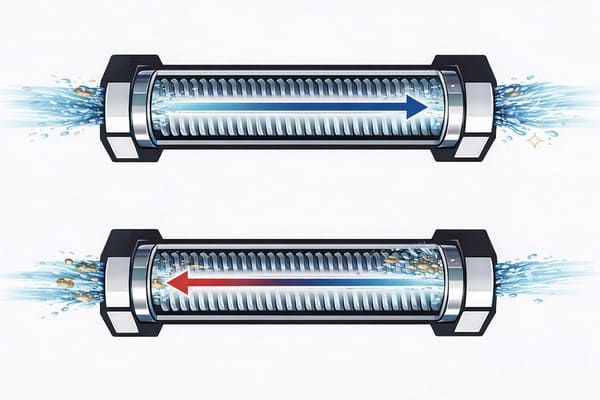
2. Periodic Backwashing Removes Sludge
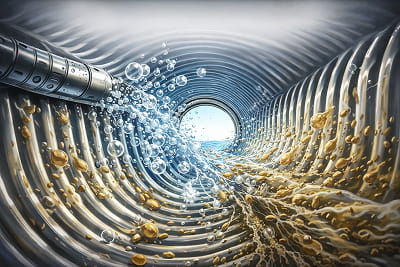
The backwash mechanism periodically reverses the flow direction, effectively dislodging and removing accumulated sludge from the tubes. Normal flow → Heat recovery Reverse flow → Sludge removal
3. Air-Assisted Purging for Additional Cleaning
An integrated air purge system introduces air bubbles to further remove residual sludge and deposits from the heat exchange surfaces.
Without a Waste Heat Recovery System
With ATX Titanium Waste Heat Recovery System
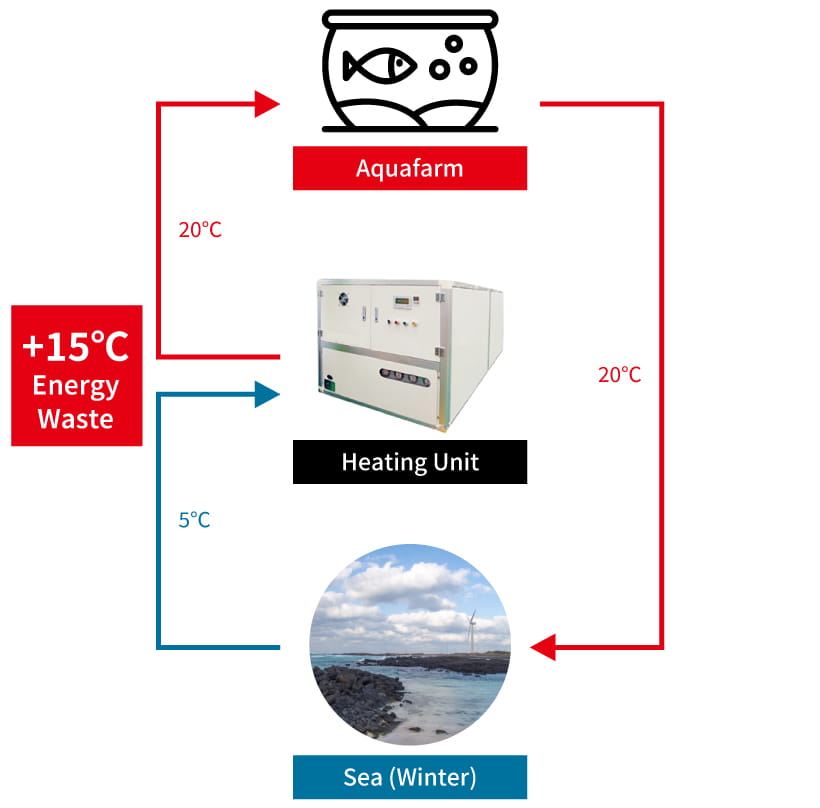
When using conventional plate heat exchangers, the thermal energy of already heated seawater is discharged and wasted. The ATX waste heat recovery system recovers 14.5 °C of heat from the discharged effluent. As a result, instead of heating the water by 12 °C, only 0.5 °C of additional heating is required, making it possible to achieve fuel cost savings equivalent to 11.5 °C of heating demand.
Recognized by the Patent Office, the Ministry of Oceans and Fisheries, government-accredited testing institutions— and validated by real users.
Are you still hesitating and missing out? At first, the concept may not be immediately intuitive. That’s why we offer on-site assessment and pilot installation.
If you are not satisfied after trial operation,
a refund is available.
Contact us, and we’ll be happy to explain everything in detail.
Model Overview
| ATX-TI-H10 | ATX-TI-H20 | |
|---|---|---|
| Treatment capacity | Up to 10 tons/hour of wastewater | Up to 20 tons/hour of wastewater |
| Heat recovery efficiency | 80% or higher | |
| Functions | Air purge & automatic backwash | |
| Scope | On-site installation included | |
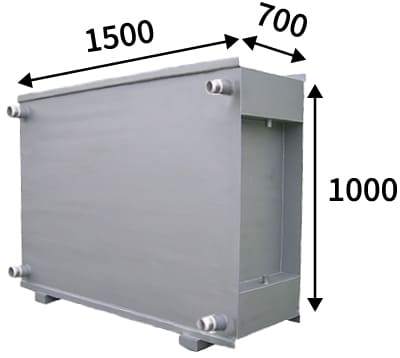
| Dimensions | 1500 (L) × 700 (W) × 1000 (H) mm | 1700 (L) × 800 (W) × 1100 (H) mm |
Exceptional Corrosion Resistance
Many systems are designed to manage accidents.
Few are designed to eliminate them by structure.
The ATX Fire-Prevention Electric Boiler redefines the safety standard for electric heating systems.
It delivers safety not managed by operation, but completed by design.