
Titanium
Ti / Ta / Zr / Nb / Ni

Titanium for Extreme Corrosion Environments

Titanium is applied in environments requiring corrosion resistance combined with strength-to-weight efficiency.

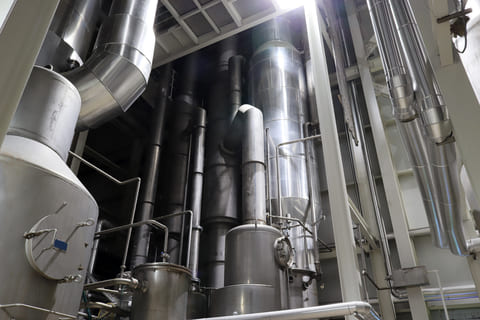
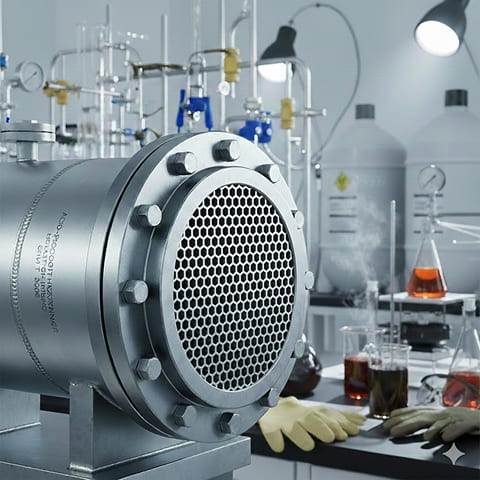
It is used in chemical processing, marine systems, and semiconductor equipment where structural performance and corrosion stability are required.

Selection is typically based on operating temperature, chloride concentration, and required mechanical strength.

ATX material Titanium

Key Material Properties of Titanium

Titanium is used where corrosion resistance and weight reduction are required.

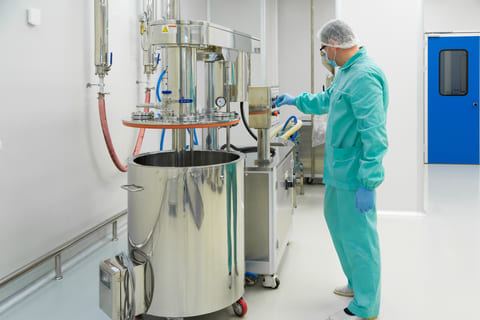
Applicable to industrial and medical systems requiring mechanical strength and chemical stability.

High Corrosion Resistance​

Stable in seawater, chloride media, and acid environments.

  • Formation of stable TiO₂ oxide layer
  • Self-repassivation under damaged surface
  • Applicable to chemical and marine systems

High Strength-to-Weight Ratio

Maintains structural strength at reduced weight.

  • Strength comparable to steel at lower density
  • Reduced structural load
  • Applicable to equipment and structural components

Heat & Oxidation Resistance

Stable oxide layer at elevated temperature.

  • Maintains oxide stability under heat
  • Resistance to oxidation and deformation
  • Applicable to thermal and exhaust systems

Biocompatibility

Chemically stable in biological and high-purity environments.

  • No reaction with bodily fluids
  • Low ion release
  • Applicable to medical and semiconductor systems

Where Titanium Is Used

Common Industrial Tantalum Grades

Category Grade Key Characteristics Typical Applications
CP Titanium Gr.1 Maximum ductility
Highest corrosion resistance
Heat exchangers, chemical equipment, formed components
Gr.2 Balanced strength and corrosion resistance
Good weldability
Pressure vessels, piping systems, process equipment
Gr.3 Higher strength than Gr.2
Maintained corrosion resistance
Structural components, high-pressure systems
Gr.4 Highest strength among CP grades
Corrosion resistance retained
Marine structures, high-load components
α Alloy Gr.7 (Ti-0.2Pd) Pd-added corrosion resistance
Stable in reducing acids
HCl systems, chlorine environments
Gr.11 Low oxygen version of Gr.7
Improved ductility and weldability
Pressure vessels, chemical equipment
Gr.12 Mo/Ni alloyed
Improved high-temperature corrosion resistance
Hydrometallurgy, high-temp piping
Gr.16 Pd-added
Enhanced formability
Seawater systems, chemical equipment
Gr.17 Low oxygen Pd alloy
Improved weldability
Marine systems, fine chemical equipment
α–β Alloy Gr.5 (Ti-6Al-4V) High strength and fatigue resistance
Lightweight structure
Aerospace structures, mechanical components
Gr.23 ELI version of Gr.5
High toughness for medical use
Implants, medical components
Gr.6 High-temperature stability
Strength retention under heat
Engine components
Gr.9 Good weldability
Optimized for tubing
Heat exchanger tubes, light structures
Gr.18 Improved toughness over Gr.9 Aircraft structures
β Alloy Ti-1023 High strength
Good formability
Aerospace structures
Ti-6242 High-temperature strength
Oxidation resistance
Engine components
Ti-6246 Higher strength than 6242
High-temperature stability
Turbine components
Ti-15-3 Excellent cold formability Panels, springs
Ti-38644 Ultra-high strength
Heat resistance
Defense components
Ti-5553 Very high strength
High load capacity
Landing gear, heavy structures

Representative Corrosion Rates

Environment Titanium (Gr.2) SUS316L Carbon Steel Notes
Seawater (25°C) Stable 0.02–0.05 Rapid Corrosion Stable oxide film, no localized corrosion
Chloride Solution Stable Pitting Severe Corrosion Resistant to chloride-induced attack
Oxidizing Acid (HNO₃) Stable Moderate Severe Maintains corrosion resistance in oxidizing conditions
Reducing Acid (H₂SO₄) Low (Condition-dependent) Moderate Severe Performance depends on concentration and temperature
Brine Stable Pitting Severe No localized corrosion observed
Wet Chlorine Gas Stable Rapid Attack Severe Attack Stable in chlorine environments
Hydrochloric Acid (HCl) Caution Severe Attack Severe Attack Condition-dependent stability

Physical Properties (Reference: Titanium Grade 2)

Titanium is applied in environments requiring corrosion resistance with reduced structural weight.

The following table presents representative physical properties for material selection and design.

Property Value (Titanium Gr.2) Description
Density 4.51 g/cm³ Lower than steel and nickel alloys, supporting weight reduction in structural and process equipment.
Melting Point 1,668°C Suitable for service conditions requiring thermal stability beyond general structural metals.
Tensile Strength ~345 MPa Provides a practical balance of strength, ductility, and fabricability for industrial applications.
Yield Strength ~275 MPa Supports structural reliability under operating load while maintaining corrosion resistance.
Elongation 20% Applicable to forming, rolling, and fabrication where ductility is required.
Thermal Conductivity ~16.4 W/m·K Lower than copper or aluminum, but applicable to heat-transfer equipment requiring corrosion resistance.
Modulus of Elasticity ~105 GPa Lower stiffness than steel, requiring consideration in deflection-sensitive design.

Meterials Supplied by ATX

Primary Metal Materials

Ingots / Blooms / Billets

Ingot · Bloom · Billet

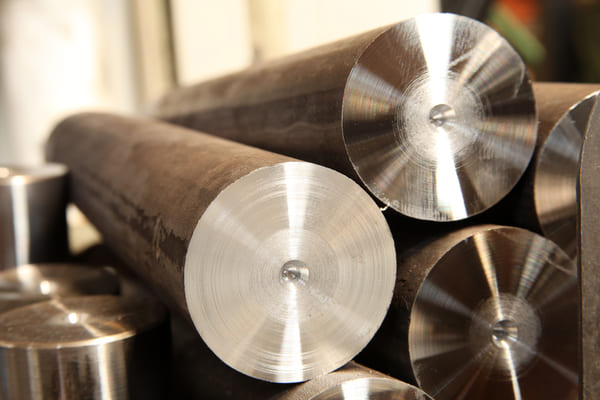
ATX Metal Bar and Rod

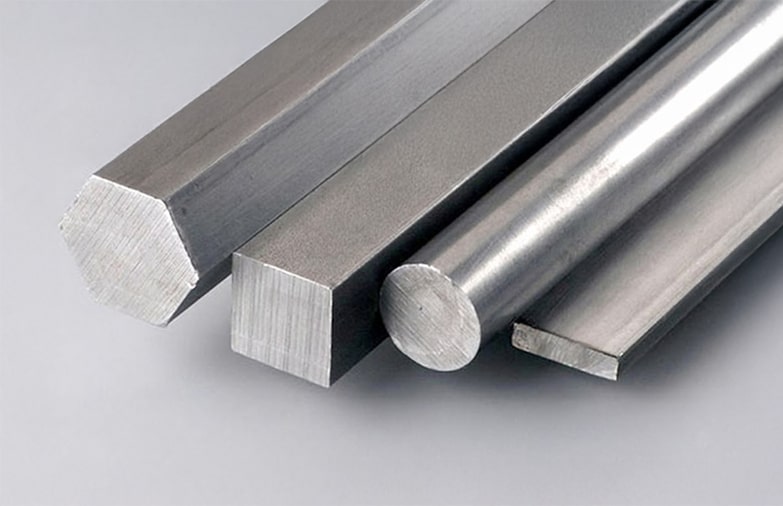
Bars 〉

Round Bar · Square Bar · Flat Bar

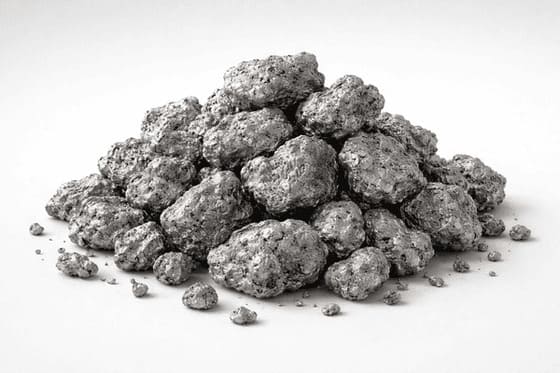
Sponge

Flat Products

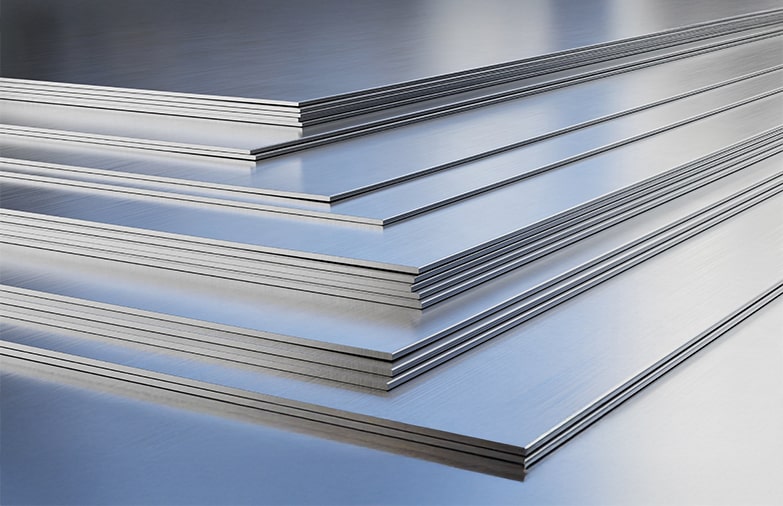
sheet

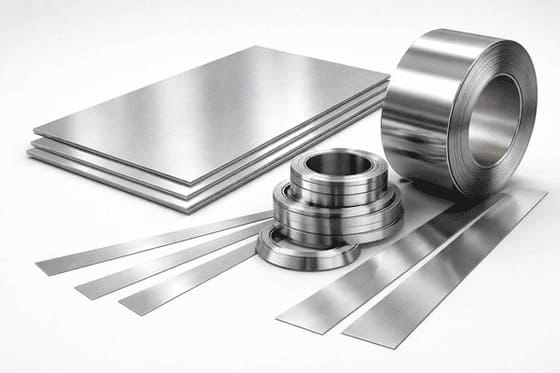
Sheet 〉

Thin Sheet · Foil · Strip

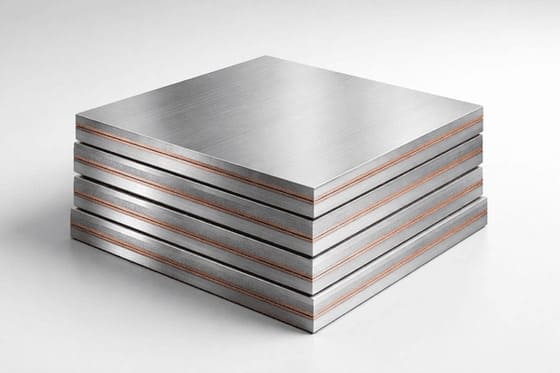
clad plate

Clad Plate

Explosion Bonded · Roll Bonded · Weld Overlay

Accessories & Components

wire products

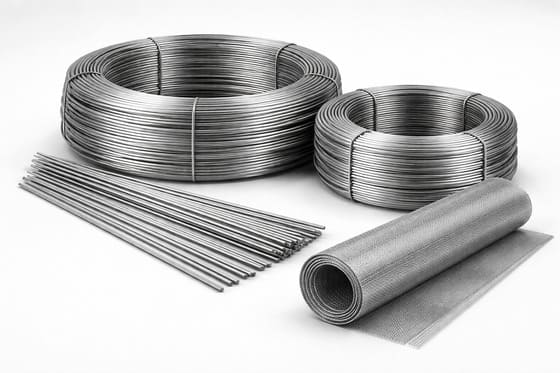
Wire Products

Wire Rod · Welding Wire · Mesh Wire
piping components

Piping Components

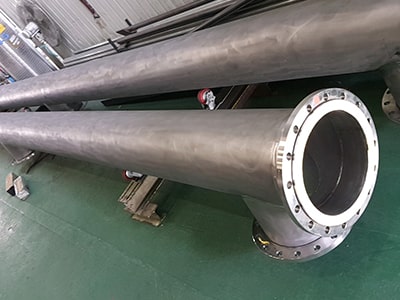
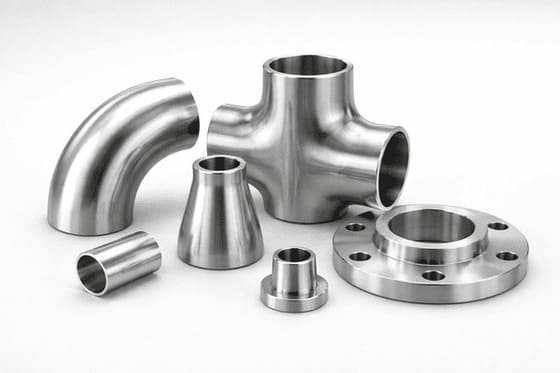
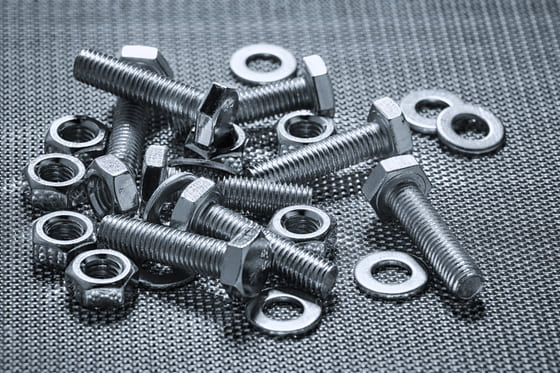
Pipe Fittings (Elbow · Tee) · Flanges
Specialty Metal Scrap & Recycling