

Heat Exchangers Engineered for
Corrosive & Critical Plant Environments
Selecting appropriate materials and configurations for heat exchangers requires careful evaluation of process conditions, operating environments, and long-term operational risks.
With extensive hands-on experience in fabricating specialty non-ferrous metals, ATX goes beyond manufacturing to provide practical engineering judgment on material selection and structural configuration.
Our approach is grounded in actual service conditions, ensuring reliable performance and durability in corrosive and critical plant environments.
Heat Exchanger Types Manufactured by ATX

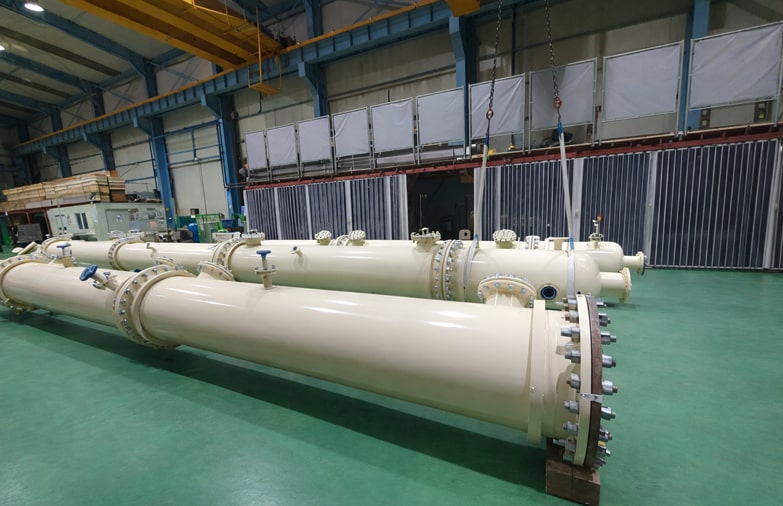
Shell & Tube Heat Exchanger
A proven shell and tube heat exchanger design engineered for high-pressure and high-temperature process conditions, recognized as the most widely used configuration in plant industries and capable of handling diverse process media across a wide range of pressures and operating temperatures.
Proven & Widely Adopted Fabrication Reference

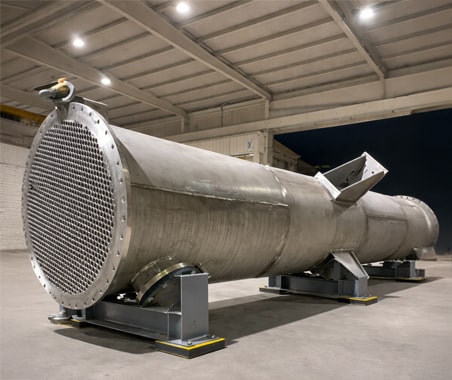
U-Tube / Fixed Tube Sheet Type
Designed to accommodate thermal expansion and complex operating conditions, this configuration is selected for corrosive and high-temperature process applications where structural stability and maintenance considerations are critical.
Thermal Expansion–Driven Fabrication Reference
- Representative structural configurations of shell & tube heat exchangers
- Selected based on thermal expansion characteristics and maintenance approach

Coil / Immersion Type
A compact heat exchanger configuration designed for direct installation inside tanks and reactors, optimized for space-constrained layouts and continuous exposure to corrosive or aggressive process fluids.
Space-Constrained Immersion Fabrication Reference
- A configuration installed directly inside tanks or reactors
- Applied in space-constrained or highly corrosive environments
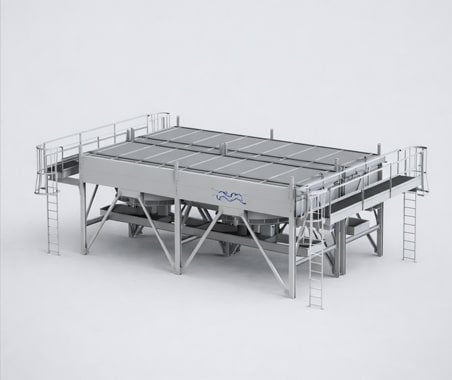
Air Cooled Heat Exchanger
A large-scale heat exchanger system engineered for continuous operation in high-capacity industrial and energy-related processes, utilizing ambient air for heat dissipation in plant environments with limited or restricted cooling water availability.
Water-Constrained Plant Fabrication Reference
- An air-cooled configuration that dissipates heat using ambient air
- Applied in plant environments where cooling water use is restricted
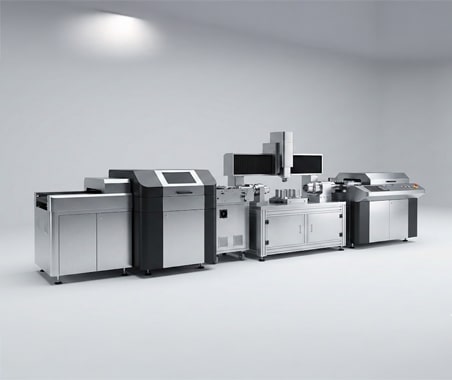
Custom-Designed Configuration
Custom-engineered heat exchanger configurations developed for process conditions where standard designs are not suitable, tailored to specific operating requirements, materials, and plant environments.
Non-Standard Process Fabrication Reference
- Applied to processes where standard configurations are not suitable
- Non-standard heat exchanger forms configured to meet specific process conditions
Why ATX Heat Exchangers
35+ years of supply experience in chemical and plant environments
With extensive experience, we support corrosion-sensitive plant environments by supplying equipment designed for stable, long-term operation.
Integrated fabrication control for consistent quality
Core fabrication processes, including forming, welding, and testing, are managed in-house to maintain consistent quality.
The entire workflow—from material sourcing to delivery—is integrated within a unified system.
Proven experience in certification and regulatory compliance
Experience with domestic and international certification requirements for plant equipment.
Inspection and testing are conducted in accordance with project specifications, either in-house or through certified third-party agencies.
Materials We Work With
We work with a range of special metals selected based on corrosion conditions, temperature, and process requirements.
Ti Titanium
Widely used for seawater and high-salinity environments, offering stable corrosion resistance for heat exchanger applications.
Ta Tantalum
Used in highly corrosive chemical environments where conventional metals fail.
Capable of withstanding conditions such as 30% hydrochloric acid and 95% sulfuric acid at elevated temperatures.
Zr Zirconium
Provides superior corrosion resistance in oxidizing chemical environments, often used where titanium reaches its limits.
Nb Niobium
Enhances durability in high-temperature and aggressive chemical environments through stable oxide formation.
Ni Nickel
Maintains mechanical stability at elevated temperatures, with strong resistance in alkaline and reducing environments.
Inspection, Testing & Regulatory Compliance
Inspection and testing are carried out in accordance with project specifications and applicable international standards.

Inspection Scope
- Pressure and leak testing (including helium leak test)
- Dimensional inspection
- Welding inspection (VT, PT, RT as applicable)
- Material verification and traceability (MTC)
- Surface condition and finishing inspection

Key Certifications and Statutory Inspections
- High-pressure Gas
- Industrial Safety
- Energy-Using Equipment
- ASME Section VIII (U / U2 Stamp)
- Classification society standards (BV, ABS)
Applications
ATX products are applied across multiple industries and a wide range of process conditions and chemical media.
Typical Industries
Chemical & Petrochemical
Plants
Oil & Gas / LNG
Plants
Pharmaceutical
& Fine Chemical Plants
Energy & Power Generation
Plants
Metal Processing
& Surface Treatment
Water Treatment
& Desalination
Typical Process Conditions & Media
Acid & AlkaliHandling
Solvent Recovery
& Condensation
NOx / HCl /
Chlorine Media
High-purity
Chemical Lines
High-corrosion
& Aggressive Media
Many customers have already been using it reliably for a long time.
Material Grades & Applicable Standards
Ti Titanium
Ta Tantalum
Zr Zirconium
Nb Niobium
Ni Nickel
Material selection and applicable standards are determined
based on project specifications, operating conditions,
and corrosion requirements.
We support material grade selection, standard compliance,
and documentation for engineering and procurement.
Engineering Inquiry
For detailed availability, lead time, and quotation,
please contact us with your required specifications.