Titanium for High-Strength and Corrosion-Resistant Applications
Titanium combines high strength, low density, and corrosion resistance, supporting reliable performance across industrial, chemical, and energy applications.
Titanium for Extreme Corrosion Environments
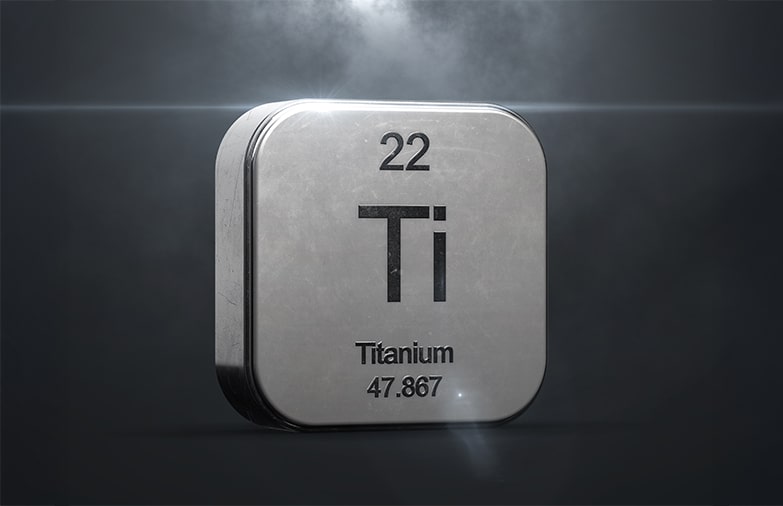
Titanium is a special non-ferrous metal that offers both high specific strength and exceptional corrosion resistance, and is used in critical equipment that requires reliability in extreme environments such as chemical, marine, and semiconductor industries.
Key Material Properties of Titanium
Titanium combines exceptional corrosion resistance, high strength-to-weight performance, thermal stability, and biocompatibility—making it a critical material for demanding industrial and medical applications.
High Corrosion Resistance
Titanium forms a stable TiO₂ oxide layer that provides excellent corrosion resistance in seawater, chlorine-based media, and organic and inorganic acids. This natural re-oxidation behavior ensures long service life, process safety, and reduced maintenance in critical equipment such as reactors and heat exchangers.
High Strength-to-Weight Ratio
Titanium offers mechanical strength comparable to steel at only about 40% of the density, enabling significant weight reduction without sacrificing structural stability. Its high fatigue strength supports reliable performance under cyclic loading, making it well suited for aerospace, energy, and industrial machinery applications.
Heat & Oxidation Resistance
Titanium retains a stable oxide layer at elevated temperatures, minimizing oxidation, thermal deformation, and structural degradation. It maintains high strength above 400 °C, supporting reliable operation in exhaust systems, power-generation equipment, and heat-exchanger tube sheets, with Grades 5 and 12 offering enhanced high-temperature performance.
Biocompatibility
Titanium is highly biocompatible, as it does not react with bodily fluids or cause toxicity. Its stable oxide layer bonds well with biological tissues, supporting use in implants and surgical tools. With minimal ion release, it is also suitable for high-purity, ultra-clean semiconductor equipment.
Where Titanium Is Used
Reliable corrosion-resistant materials for offshore and seawater environments
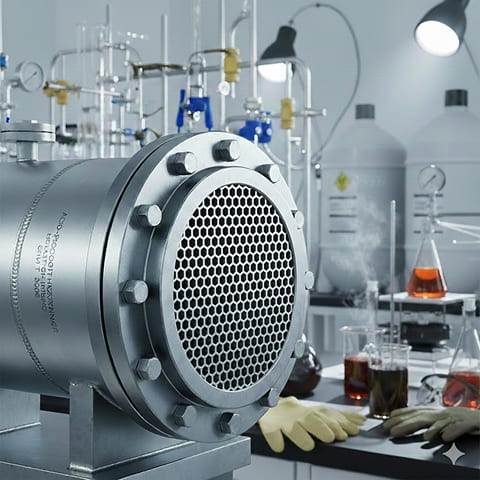
Engineered materials supporting stability in aggressive chemical processes
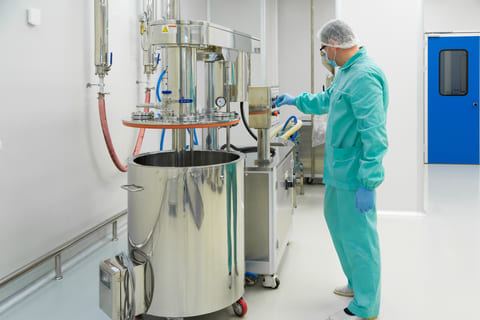
High-purity material solutions for precision semiconductor manufacturing
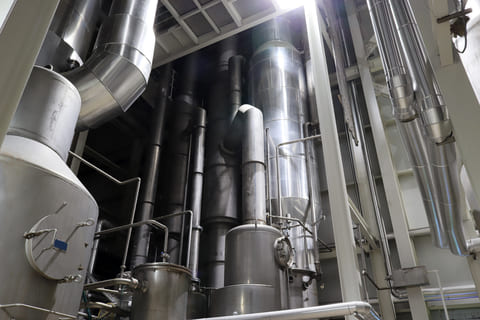
Advanced materials designed for high-performance and demanding conditions
| Category | Grade | Key Features | Main Characteristics | Primary Applications |
|---|---|---|---|---|
| CP Titanium | Gr.1 | Highest ductility and formability | Low strength, maximum corrosion resistance | Heat exchangers, chemical plants, formed parts |
| Gr.2 | Industry standard | Balance of strength & corrosion resistance, excellent weldability | Pressure vessels, piping, chemical process equipment | |
| Gr.3 | Stronger than Gr.2 | High strength while maintaining corrosion resistance | Structural components, high-pressure environments | |
| Gr.4 | Highest strength among CP grades | Marine and high-pressure structural parts | Offshore structural materials, high-strength components | |
| α Alloy | Gr.7 (Ti-0.2Pd) | Palladium added | Highest level of corrosion resistance among all titanium | Hydrochloric acid & chlorine chemical equipment |
| Gr.11 (Ti-0.2Pd, Low O) | Low-oxygen version of Gr.7 | Enhanced ductility and improved weldability | Pressure vessels for chemical plants | |
| Gr.12 (Ti-Mo-Ni) | High temp/pressure corrosion resistance | Optimized for high-temperature corrosive environments | Hydrometallurgy, high-temperature piping | |
| Gr.16 | Pd alloy (Low O) | Same as Gr.7 with increased formability | Chemical/Seawater high-corrosion resistant parts | |
| Gr.17 | Pd alloy (Low O) | Similar to Gr.11 | Fine chemical and marine equipment | |
| α–β Alloy | Gr.5 (Ti-6Al-4V) | Global standard titanium alloy | High strength, excellent fatigue resistance, lightweight | Aerospace structures, mechanical components |
| Gr.23 (Ti-6Al-4V ELI) | Extra Low Interstitial (ELI) of Gr.5 | High toughness, medical grade standard | Implants, orthopedic and dental applications | |
| Gr.6 (Ti-5Al-2.5Sn) | High-temperature stability | Superior high-temp strength retention | Aerospace engine casings | |
| Gr.9 (Ti-3Al-2.5V) | Lightweight with excellent weldability | Optimized for tubing | Heat exchanger tubes, bicycle frames | |
| Gr.18 | Improved version of Gr.9 | Increased toughness | Aircraft structural materials | |
| β Alloy | Ti-10V-2Fe-3Al (Ti-1023) | High strength and excellent workability | High strength for structural components | Aerospace structures |
| Ti-6Al-2Sn-4Zr-2Mo (Ti-6242) | Excellent high-temp performance | High-temp strength and oxidation resistance | Aerospace engine components | |
| Ti-6Al-2Sn-4Zr-6Mo (Ti-6246) | Stronger than 6242 | Stable at ultra-high temperatures | High-temperature turbine components | |
| Ti-15V-3Al-3Cr-3Sn (Ti-15-3) | Deep-formable alloy | Excellent cold-forming capabilities | Aerospace panels, springs | |
| Ti-3Al-8V-6Cr-4Mo-4Zr (Ti-38644) | For extreme environments | Ultra-high strength and heat resistance | Defense and special aerospace components | |
| Ti-5Al-5V-5Mo-3Cr (Ti-5553) | Highest level of strength | For high-load components like landing gear | Heavy-load aerospace structures |

Exceptional Corrosion Resistance
ATX provides a one-stop solution from material supply to customized fabrication, backed by over 35 years of manufacturing and processing experience in titanium and specialty non-ferrous metals.